It's been a busy few weeks here in Mom's garden. With much excitement we begin into our second spring season. How fast time flies! It's neat to observe which plants survived, which ones died and sprang back to life, yet not forgetting those that did not make it and wonder why. We wonder to learn from our past actions and decisions, hoping to be better the next time around. Most of my mistakes have been planting too closely. Plants, like people, need space to grow. Most also need a good six hours or so of sunlight. Urban gardening can be a tricky endeavor, especially when it comes to sun exposure. With walls, fences and other surrounding structures, sunlight may barely, or not at all, reach certain areas. From my observations of which plants survived and which ones did not, I found that the ones I planted too close to the wall died. The wall provided too much shade. The other herbs and perennials survived, bouncing back from a dry twiggy appearance, with some varieties slowly greening as we get deeper into spring. Much progress has been made, and the garden has been revitalized from a barren winter. I've made several trips to Armstrong Gardens in Monrovia with Jet and Lee. It's been fun taking them along and strolling through the beautiful outdoor space of the garden store. I think they enjoy it as much as I do, being introduced to a new space of sounds, colors and smells.
 |
| My best friends: Jet & Lee. |
 |
| Delicate passengers off to a new home. |
I myself always enjoy seeing, smelling and feeling new cultivars of plants and flowers. Shopping for gardening is a sensual experience as is working in a garden. Yes, yes, Armstrong Gardens is a little pricey, the boutique for gardeners in the world of garden shopping, but where I don't splurge in shoes I do in plants. Plus, I look at it as an investment in health. I mean, why not Organic Large Leaf Italian Basil? A fresh caprese salad comes to mind and well worth the investment in health and taste. Why not E.B. Organic Compost to build healthy living soil for a healthy garden?
 |
Contains: composted wood shavings, redwood compost,
composted chicken manure, mushroom compost, fir bark,
bat gauno, kelp meal and alfalfa meal. YUM!
|
Good, healthy, living soil is the foundation of any garden, whether it be for flowers, vegetables, roses, trees or shrubs. I've used E.B. Stone Organics in the past and the rich hummus-smell tells all. This is a great amendment for the variety of plants mentioned above. It's recommended to amend soil at least once a year, sprinkling two to three inches of this on top of the planting area and gently tilling about six-inches deep. Because soil is the number one priority, the first trip I made to Armstrong was just for some E.B. Organic Compost and research.
Researching, looking, and critical thinking are all important steps, if you are a planner, or if for no other reason to save yourself from burning a hole in your wallet. At least, for me, I hold myself back from buying anything the first time around. So for my first trip, I kept my eyes open (and hands tied behind my back) for ideas of what flowers and edibles were available, which ones to research to see if they would work with my space and garden goals. I was in search of perennials mostly, sprinkled with some annuals, some California natives, hardy, maybe even drought-tolerants, but beautiful...and with flowers....
am I asking for too much? No! Because plants like these do indeed exist!
Flowers:
1. Zinnia Magellan Mix and Zinnia State Fair Mix (
Zinnia elegans)- Annual. Makes good cut flowers. Attracts butterflies. Looking like teddy bears is how my friend Laila describes them.
 |
| Potted Zinnias brighten up garden entrance. |
2. Alyssum Snow Crystals (
Lobularia maritima)- Annual.Tiny white flowers which look like a blanket of snow when planted close together. Great for borders.
 |
| Alyssum used as border for fountain. |
 |
| Alyssum planted together looks like a blanket of snow. |
3. CA poppy (
Eschscholzia californica)- California native, technically annual, but can act as a perennial due to self-seeding nature, drought-tolerant, official state flower of California since 1890. Woot!
 |
| Good 'ole Cali Poppy. |
4. Gerbera Daisy Revolution Mix (
Gerbera jamesonii)- My kind of name for a flower! Definite flower power here. These perennial daisies make great vibrant cut flowers. Cut flowers often to encourage more growth and give as gifts to make new friends, or to maintain old ones.
 |
| Gerbera Daisies, great cut flowers, for that ikea-display room in your home. |
5. Cosmos Sonata Mix (
Cosmos bipinnatus)- Bright colors of pink, purple, and white, add musical colors to garden spaces. Drought-tolerant. Make for great self-seeding annuals.
 |
| Cosmos Sonata Mix! Let's Dance!! |
6. Freesia- Perennial corms (bulbs), but must be stored at specific 85 degree temperature for 3-4 months before planted. Originates from Africa, okay so not being very sensitive to keeping it local, but if you smelled these fragrant beautiful flowers, you'd buy them too!
 |
| Fragrant Freesias will awaken any soul. |
7. Santa Barbara Mexican Bush Sage (
Salvia leucantha)- An evergreen, water-wise dwarf of the Mexican Bush Sage, this shrub produces beautiful purple flowers which are a favorite to hummingbirds. Great for rock gardens. Blooms spring to fall. Grows rapidly. Does not have same culinary uses as the sage herb.
 |
| Santa Barbara Mexican Bush Sage, great for attracting beneficiaries. |
8. Calendula Pot Marigold (
Calendula officinalis)- Edible petals add color to fresh salads. It is a versatile flower which grows in most soil types. Technically a perennial, but typically grows as an annual, since it cannot tolerate extreme temperatures of hot or cold. Flowers can last year round if conditions permit.
 |
| Orange Calendula Pot Marigolds in the foreground. |
9. Iceland Poppy (
Papaver nudicaule)- Short-lived perennials (2-3 seasons), fury buds and stems; delicate-tissue-paper-like flowers. These colorful beauties prefer full-sun and cool temperatures, thriving in fall or spring. Be careful though, because all parts of this flower are poisonous! Maybe not the best choice for a school garden.
 |
| "I'm a delicate, but tough white Iceland Poppy!" |
10. Joey Paw (
Angiozanthos Bush Tango 1)- Look like little kangaroo paws. This is an evergreen perennial with tubular-like flowers. Why not include some scenes of the Outback in your garden?
 |
| Do you Tango? |
11. Fern Leaf Yellow Yarrow (
Achillea millefolium)- Perennial. Good for butterfly gardens, drought-tolerant, makes a good companion plant, attracts lady bugs and other beneficiaries, herb; also known as "soldier's woundwort" for its medicinal purposes. The way the mini flowers turn from a gray to yellow and at different rates, looks as if someone is slowly painting them.
 |
| Fern Leaf Yellow Yarrow before turning yellow. |
 |
| Fern Leaf Yellow Yarrow turned yellow. |
Herbs & Edibles:
1. Italian Oregano (
Origanum vulgare)- Perennial. To flavor those pastas, pizzas, poultry, fish, meat, even make salsa. Use this herb fresh or dried. This herb also acts as a great cover crop, used as a living mulch rather than wood chips or other types of mulch. I like plants that serve multi-purposes and keeps the habitat as natural as possible. Also produces pretty flowers. Flavor is strongest when herb flowers.
 |
| Italian Oregano is a must have herb for any gardener or cook. |
2. Italian Large Leaf Basil (
Ocimum basilicum)- Annual. Wonderfully tasting and long lasting if constantly harvested. Cut flowers to elongate growing season and to make great bouquets. This tricks the plant into putting more energy into growing than into flowering and dying off. Basil and tomatoes are good companion plants. Plant in a nice warm spot since they love heat.
 |
| Deliciously fragrant and incredibly tasty Italian Basil. |
3. Thai Hot Pepper (
Capsicum frutescens)- Perennial. My first time growing but sounds tasty and hot, with Scoville heat units of 50,000-100,000!! This is hotter than a Jalapeno. Bright, fat little peppers look like old-fashioned Christmas lights. My mom likes to add chilies to braised fish and pork dishes. The Thai Pepper plant is on the left between the yellow Calendula and green-not-yet-bloomed Zinnia.
 |
| Thai Pepper, Jalapeno and Basil, live beside Zinnias and Calendulas. |
4. Jalapeno Pepper (
Capsicum annuum)- Annual, but can have long growing season. Scoville heat units of 2,000-8,000. Because I love spicy food! This is my second time growing, but I hope to produce more than one small pepper this time around. Excellent in Mexican cuisine. Jalapeno pepper plant lies in the center.
5. Brandywine Heirloom Tomato (
Solanum lycopersicum)- Annual. Sounds like a tomato for hobbits, but I'm eager to try. As with heirloom plants, these tomatoes are open-pollinated, which means that they breed true to the parent from generation to generation, retaining consistency in flavor and genetic make-up, unlike hybrid, or cross-pollinated plants, which lose certain characteristics after generations pass.
 |
| Brandywine tomatoes from the Shire (kidding)! |
6. Creeping Thyme (
Thymus serpyllum)- Makes a great seasoning and can be used dried or fresh. Season fish, chicken, pork, meat, eggs, cheeses, sauces, even make a tea! This herb, like the Italian Oregano, also makes a great cover crop, being an evergreen perennial herb and producing pretty pink flowers. Ancient Greeks believed thyme was a source of courage and burned them as incense in Temples. During the European Middle Ages, thyme was placed under pillows to ward off nightmares and help with sleep. Women also gave bundles of thyme to knights for courage.
 |
| Creeping Thyme, anything but creepy. |
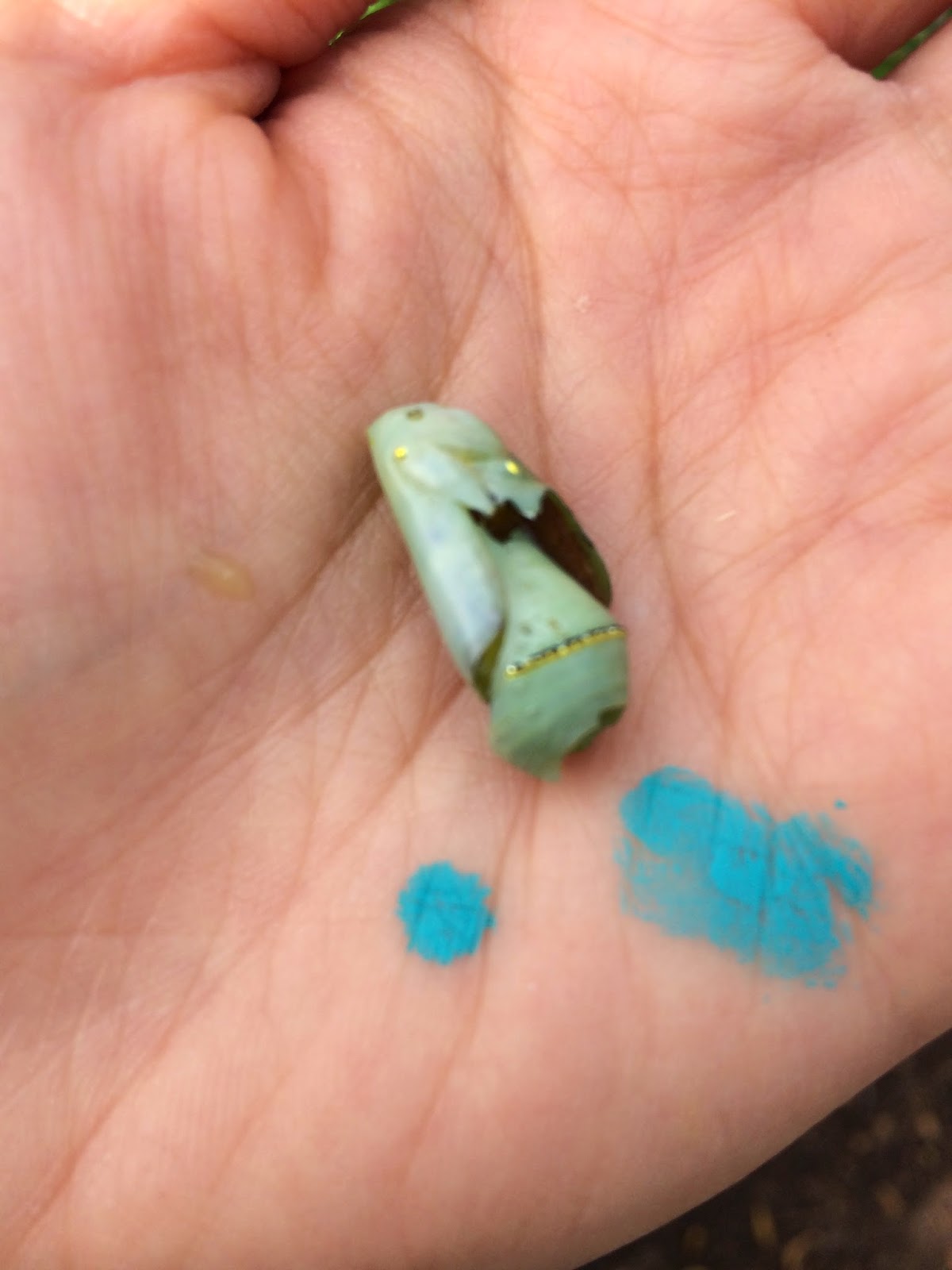
With the plants I selected, I ended up creating a butterfly garden. As I dug each hole, set each plant in its new home, gently patting soil around the crown of each, as a mother tucks her child in bed, I couldn't help but wonder if I had made the right decisions. Had I given each the right home? Will they be happy? Will they get enough nutrients and sunlight? Do they have enough space to grow alongside their fellow companions? Will they make good companions to one another? Like any gardener, farmer, nurturer or parent, I suppose all we can do is our best.
All I can do is watch over them and take care of them, hoping that my efforts will grow thriving plants and invite more life into the garden: hummingbirds, butterflies, bees, those hard working pollinators which do so much work for us as gardeners and for the environment as deliverers and preservers of biodiversity. Plus, these critters are pretty to look at. I noticed a hummingbird visit the garden, two days in a row I was here, but I hadn't had any flowers yet. Now that the garden is more hospitable to life, I hope our hummingbird friend returns.
*photos by Tiffanie Ma